
️🧑⚕️❤️Learn While You Earn: Cna Paid Training(Government Support)
💰 Paid Salary During Training: $15.00–$17.50 per hour
🎓 No College Degree Required | ✅ No Need To Worry About Tuition Fees
Starting a career as a Certified Nursing Assistant (CNA) does not require a four-year college degree or expensive nursing school tuition. Across the United States, government-supported and employer-sponsored CNA training programs allow participants to earn a paycheck while learning essential patient-care skills—often leading directly to full-time employment in hospitals, nursing homes, assisted living facilities, and home health agencies.
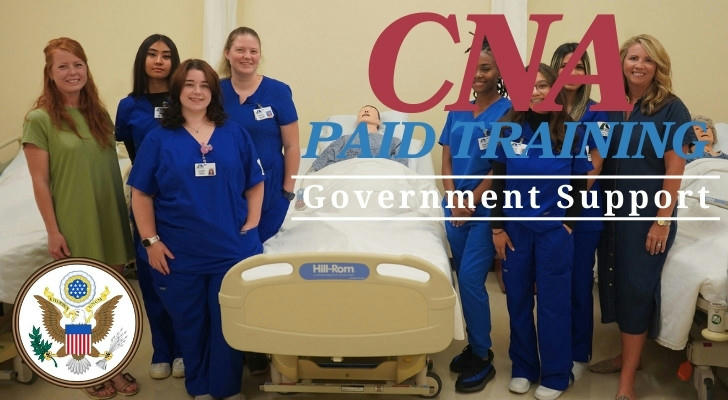
Through state-approved CNA programs and workforce-supported healthcare apprenticeships, participants receive paid on-the-job training, structured classroom instruction, and credentials required for immediate entry into the healthcare workforce.
🌟 Why Choose a Paid CNA Program?
✅ Earn While You Learn — Paid From Day One
Unlike private nursing schools that require upfront tuition, many government-supported CNA programs place you directly with a healthcare employer. Trainees earn hourly wages while learning under the supervision of licensed nurses and experienced clinical staff.
Training typically covers:
- Basic patient care and daily living assistance
- Vital signs monitoring and infection control
- Safe patient handling and mobility support
- Documentation and communication in clinical settings
- HIPAA compliance and workplace safety
You work, you learn, and you get paid—starting day one.
✅ Workforce-Approved, Job-Focused Training
Most paid CNA programs are supported by state workforce agencies, Medicaid-supported facilities, or federally aligned apprenticeship initiatives. Training durations are usually 4 to 12 weeks, combining classroom instruction with hands-on clinical experience.
Key advantages include:
- Training aligned with real employer demand
- Fast entry into healthcare jobs
- High job placement rates after completion
- Clear pathways to LPN, RN, or other nursing roles
Many graduates are hired full-time by the same facility that trained them.
✅ State-Recognized CNA Certification
Upon successful completion, participants become eligible for:
- State CNA certification (after passing the competency exam)
- Placement on the State Nurse Aide Registry
- OSHA-aligned workplace safety training
These credentials are required nationwide and recognized by hospitals, long-term care facilities, and home health providers across the U.S.
🧰 Program Structure: Government-Supported CNA Training
According to Apprenticeship.gov, healthcare support roles—including CNA positions—are increasingly offered through registered, publicly supported “learn while you earn” training models backed by workforce supporting and employer partnerships.
Common program features include:
- Paid employment during training
- Classroom instruction through approved training providers or community colleges
- Supervised clinical hours in licensed healthcare facilities
- Direct eligibility for CNA certification exams
👩⚕️ What Skills Will You Learn?
Participants typically receive hands-on training in:
- Assisting patients with bathing, dressing, and mobility
- Measuring vital signs (blood pressure, temperature, pulse)
- Infection prevention and hygiene protocols
- Patient communication and emotional support
- Medical documentation and reporting procedures
- Team-based care in clinical environments
Training focuses on real workplace responsibilities, not abstract theory.
👥 Who Can Apply?
| Applicant Type | Program Fit |
|---|---|
| Young Adults (18–25) | Start a healthcare career without college debt |
| Career Changers (25–45) | Transition into a high-demand medical role |
| Experienced Workers (45–60) | Add healthcare credentials quickly |
| Mature Learners (60+) | Structured training with stable schedules |
Most programs require:
- Legal authorization to work in the U.S.
- Background check clearance (state-required)
- Basic English and math comprehension
- Physical ability to assist patients
- Liv scan with clear background
No prior healthcare experience required.
🎯 CNA Programs by Age Group
Paid CNA programs are open to applicants of all ages:
Ages 18–25
A fast entry into healthcare without student debt, ideal for building long-term medical careers.
Ages 25–40
Well-suited for career changers seeking stable income, benefits, and high demand nationwide.
Ages 40–55
Ideal for individuals seeking reliable employment, structured schedules, and meaningful work.
Ages 55+
CNA roles offer predictable routines and strong demand in long-term care and support settings.
Healthcare support roles prioritize reliability, compassion, and practical skills—regardless of age.
🚀 Application Process
- Submit an online application
- Complete eligibility screening
- Attend interview or orientation
- Receive acceptance notice
- Begin paid CNA training and employment
Timelines vary by state and employer, but many applicants receive responses within a few weeks.
✅ Summary: Start a Healthcare Career Without Student Debt
Through government-supported CNA programs, you can:
- Earn income while training
- Obtain state-recognized CNA certification
- Gain job-ready healthcare skills
- Secure stable employment in a growing industry
No college degree required.
No Need To Worry About Tuition Fees.
Just a clear, proven path into healthcare.
If you’re ready to work, learn, and earn—a paid CNA program is one of the fastest ways to enter the U.S. healthcare workforce.