
️🧪💉 Earn While You Learn: Paid Phlebotomy Training (8 Weeks)
💰 Paid Training | 📅 Training Duration: 8 Weeks
🎓 No College Degree Required | ✅ No Need To Worry About Tuition Fees
Starting a career as a Phlebotomy Technician doesn’t require years of college or expensive medical school tuition. Across the United States, employer-supported and workforce-aligned phlebotomy training programs allow eligible participants to learn essential blood collection skills while preparing for immediate employment in healthcare settings.
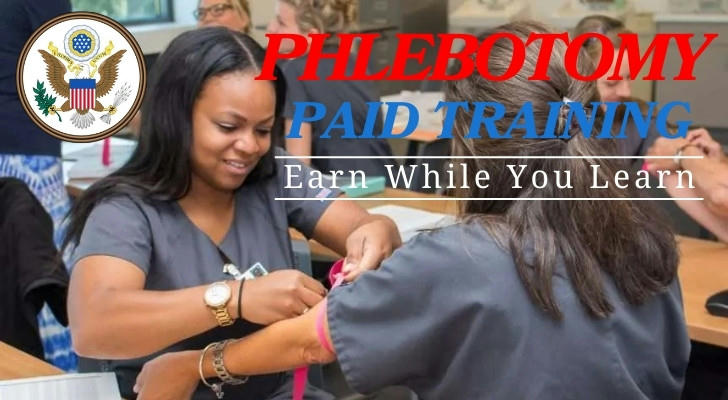
Many healthcare employers and approved training providers now offer short-term, job-focused phlebotomy programs, some of which are structured under paid or employer-sponsored training models—helping students enter the healthcare workforce faster and with less financial burden.
🌟 Why Choose an 8-Week Paid Phlebotomy Program?
✅ Learn Practical Skills for Immediate Employment
Phlebotomy is a hands-on healthcare role focused on blood specimen collection and patient interaction. Training programs emphasize real-world clinical skills, not abstract theory.
Typical training covers:
- Venipuncture and capillary blood collection techniques
- Patient identification and safety procedures
- Infection control and OSHA-compliant practices
- Specimen labeling, handling, and transport
- Professional communication in clinical environments
Most programs combine classroom instruction with supervised clinical practice, ensuring graduates are job-ready.
✅ Short-Term, Workforce-Oriented Training
Unlike traditional degree programs, phlebotomy training is designed for fast entry into healthcare employment.
Most programs last 6–8 weeks, depending on state regulations and clinical hour requirements.
Key advantages include:
- Rapid pathway into hospitals and diagnostic labs
- Training aligned with employer hiring needs
- High demand across outpatient clinics and labs
- Entry-level role with clear advancement potential
Graduates often qualify for positions immediately after certification.
✅ State-Approved & Industry-Recognized Certification
Upon completion, participants are typically eligible to:
- Sit for national phlebotomy certification exams (such as NHA or equivalent bodies, depending on the program)
- Meet employer hiring requirements for entry-level phlebotomy roles
- Work in hospitals, laboratories, blood centers, and outpatient clinics
Programs like the HNL School of Phlebotomy provide structured training aligned with employer expectations and clinical standards, preparing students for real healthcare environments.
🧰 Program Structure: Paid or Employer-Supported Phlebotomy Training
While program models vary by state and employer, many workforce-aligned phlebotomy programs include:
- Structured classroom instruction
- Supervised clinical blood draw experience
- Training delivered by approved medical educators
- Direct preparation for certification exams
- Job readiness and placement support
Some programs are employer-sponsored, meaning trainees may be hired directly after—or even during—training, depending on local workforce initiatives.
👩⚕️ What Skills Will You Learn?
Participants typically receive hands-on training in:
- Drawing blood safely and efficiently
- Using sterile equipment and following infection protocols
- Managing patient anxiety and professional communication
- Proper specimen handling and documentation
- Working within clinical teams and laboratory workflows
Training focuses on what employers actually require on day one.
💰 Future Salary Outlook: Phlebotomy Technician in the U.S.
Phlebotomy technicians are considered entry-level healthcare professionals, but demand remains consistently strong due to aging populations, chronic disease management, and ongoing diagnostic testing needs across the United States.
📊 Average Salary Range
According to recent U.S. labor market data:
- Average annual salary: $38,000 – $45,000
- Average hourly wage: $18 – $22 per hour
Entry-level phlebotomists typically start on the lower end of the range, while experienced technicians, hospital-based roles, or specialty lab positions can earn higher wages.
🏥 Salary by Work Setting
Earnings may vary depending on the employer type:
- Hospitals: Higher pay, shift differentials, stable hours
- Diagnostic laboratories: Consistent schedules, strong demand
- Outpatient clinics: Predictable daytime hours
- Blood donation centers: Volume-based experience, steady employment
Many employers also offer benefits such as health insurance, paid time off, and retirement plans, especially in hospital and large healthcare systems.
📈 Career Growth & Income Potential
While phlebotomy is often an entry point, it creates clear upward mobility:
- Advance to Lead Phlebotomist or Lab Technician roles
- Transition into Medical Assistant, Clinical Lab Technician (CLT), or Nursing pathways
- Use experience as a stepping stone toward LPN or RN programs
With additional certifications or clinical experience, income potential and job stability typically improve.
🔎 Employment Outlook
Phlebotomy remains a high-demand healthcare support role, with steady hiring driven by:
- Increased diagnostic testing
- Expansion of outpatient and preventive care services
- Ongoing need in long-term care and hospital systems
For individuals seeking fast employment, stable income, and a foothold in healthcare, phlebotomy offers a strong return on short-term training investment.
👥 Who Can Apply?
Paid or workforce-supported phlebotomy programs are designed for a wide range of applicants:
| Applicant Type | Program Fit |
|---|---|
| Young Adults (18–25) | Fast entry into healthcare without long-term college debt |
| Career Changers (25–45) | Transition into a stable medical support role |
| Experienced Workers (45–60) | Add healthcare credentials quickly |
| Mature Learners (60+) | Structured training with predictable schedules |
Typical requirements:
- Legal authorization to work in the U.S.
- Background check clearance (state-required)
- Basic English comprehension
- Ability to perform blood draws and stand for extended periods
🚀 Application Process
- Submit an online application
- Complete eligibility screening
- Attend orientation or interview
- Receive acceptance notice
- Begin phlebotomy training
Timelines vary by state and training provider, but many applicants receive responses within a few weeks.
✅ Summary: A Fast, Practical Path into Healthcare
With an 8-week phlebotomy training program, you can:
- Learn job-ready healthcare skills quickly
- Prepare for recognized certification exams
- Enter a high-demand medical support role
- Avoid long-term college debt
No college degree required.
No Need To Worry About Tuition Fees.
If you’re looking for a short, focused, and employment-driven entry into healthcare, paid or employer-aligned phlebotomy training is one of the most efficient paths into the U.S. healthcare system.